More than 91 km of documented Choctawhatchee expansion.
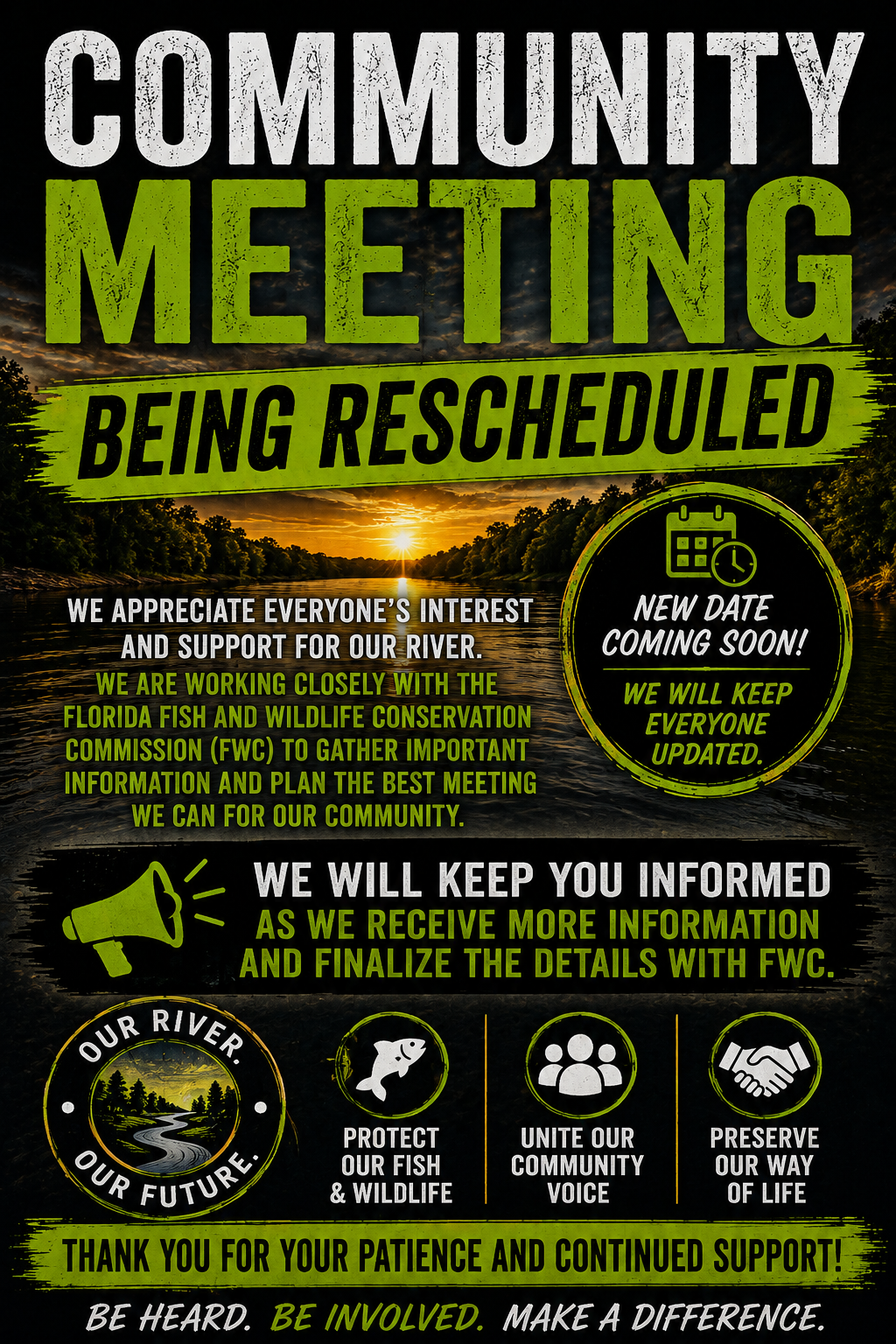
COMMUNITY MEETING UPDATE BEING RESCHEDULED
THE CHOCTAWHATCHEE NEEDS YOUR VOICE
MEETING
RESCHEDULED.
STAY READY.
The previous meeting date has been canceled
A NEW COMMUNITY MEETING DATE IS COMING SOON
STATUSBEING
RESCHEDULEDPrevious date canceled
RESCHEDULEDPrevious date canceled
NEXT STEPWORKING WITH FWCWe will share the new date and details as soon as they are finalized.
 OPEN FULL NOTICE ↗
BE HEARD ◆ BE INVOLVED ◆ MAKE A DIFFERENCE ◆ NEW DATE COMING SOON
IMPORTANT COMMUNITY UPDATE
WATCH.
SHARE.
STAY INFORMED.
The previous meeting date has been canceled while organizers work closely with the Florida Fish and Wildlife Conservation Commission to gather information and plan the best meeting possible.
DOWNLOAD VIDEO ↓THE CHOCTAWHATCHEE EVIDENCE
THIS ISN'T A
GENERIC WARNING.
FWC-linked long-term research sampled the Choctawhatchee from 1997 through 2011. After flathead catfish became established, they expanded rapidly, became numerically dominant at sampled sites, and native spotted bullheads declined.
A 2024 standardized survey found flatheads were again the most abundant catfish collected—and reported no bullheads at 25 randomly selected sites.
Time after first detection to become the dominant catfish at a sampled site.
None observed or collected across 25 randomly selected Choctawhatchee sites.
Share of sampled catfish reported in the 2024 survey summary.
WHAT THE RECORD SHOWS
NATIVE BULLHEADS PRESENT→FLATHEAD ARRIVES→RAPID EXPANSION→FLATHEAD DOMINANCE→2024: NO BULLHEADS SAMPLED
This sequence describes the sampling record. It does not claim that every ecological change has a single cause.
FLATHEAD EFFECTS RESEARCH LIBRARY
FOLLOW THE
EVIDENCE.
Explore the local record, documented diet and food-web effects, regional warning cases, removal science, and the proposed Choctawhatchee policy response.
01 / LOCAL EVIDENCE0BULLHEADS REPORTED IN 25 SITES SAMPLED IN 2024
What happened to the Choctawhatchee catfish community?
Long-term river sampling records rapid flathead expansion, growing dominance, and a steep decline in native spotted bullheads.
READ THE FULL EVIDENCE →02 / ECOSYSTEM EFFECTS5–50%MODELED SUPPRESSION OF NATIVE FISH-COMMUNITY BIOMASSHow can one apex predator reshape an entire fish community?
Modeling and diet research show that introduced flatheads can affect native fish through both direct predation and competition.
READ THE FULL EVIDENCE →03 / DIET & PREDATION47PREY SPECIES IDENTIFIED IN ONE RECENT STUDYWhat do invasive flatheads eat—and how much?
Research identifies a broad diet of fish, crayfish, and other aquatic prey, with larger flatheads shifting increasingly toward fish.
READ THE FULL EVIDENCE →04 / REGIONAL WARNING100,000+FLATHEADS REMOVED FROM THE SATILLA BY 2023Georgia removed 100,000 flatheads—and still must suppress them.
The Satilla River shows both the damage an introduced population can cause and the sustained effort required to control it.
READ THE FULL EVIDENCE →05 / MANAGEMENT>25%ANNUAL FISHING MORTALITY ASSOCIATED WITH SIGNIFICANT DECLINES IN SATILLA MODELSCan aggressive harvest actually control invasive flatheads?
Models and real removal programs agree on one point: directed harvest can work, but pressure must be substantial and sustained.
READ THE FULL EVIDENCE →06 / POLICY OPTION25EXISTING FLORIDA RECREATIONAL HOOK LIMIT FOR LISTED PASSIVE GEARWhy a Choctawhatchee live-bait pilot deserves consideration.
Florida recommends live bream for flatheads but restricts that bait on passive gear; other states offer tightly regulated models.
READ THE FULL EVIDENCE →WHY IT MATTERS
AN APEX PREDATOR
CHANGES THE RIVER.
Large flatheads consume live prey, including catfish, sunfish, crayfish, and other aquatic animals. Research from introduced populations documents direct predation and broader food-web effects.
Flatheads can affect far more than one sportfish. The pressure reaches native catfish, baitfish, crayfish, and the wildlife that depends on the same food web.
We do not claim that Choctawhatchee flatheads have been proven to reduce frog, snake, turtle, or bird populations. Those concerns should be discussed as potential indirect food-web effects.
THE MEETING ISSUE
GIVE ANGLERS A
CONTROLLED TOOL.
Florida recommends live bream for catching Choctawhatchee flatheads, yet current rules prohibit whole or cut bream on bush hooks and trotlines. The proposal is a narrow, conservation-focused exception—not a statewide free-for-all.
Choctawhatchee-specific pilot
Create a three- or five-year experimental flathead-removal regulation limited to the watershed.
Legally caught, local bait
Require bream to be caught by hook and line, counted within creel limits, and sourced from the same watershed.
Keep safety limits
Retain identification, gear-check, hook-count, and appropriate hook-size safeguards.
Measure the result
Pair the pilot with annual catch reporting and repeatable FWC population monitoring.
REGULATORY CONTEXT
FLORIDA HAS
OPTIONS.
Neighboring and Southeastern states use regulated live-bait exceptions, including river-specific approaches. The attached comparison is informational and should always be checked against current official regulations.
OPEN FULL-SIZE MAP ↗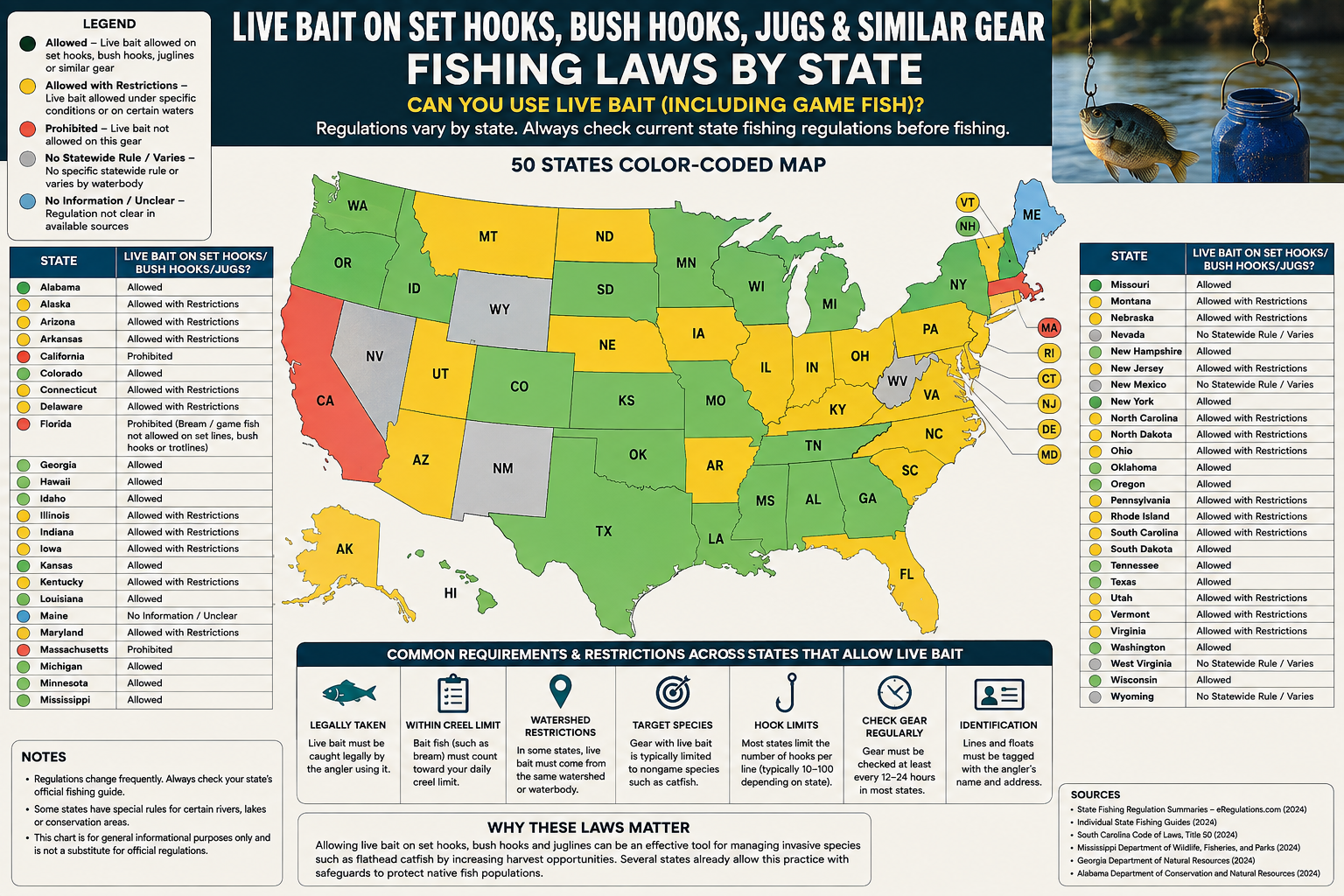
YOUR VOICE STILL MATTERS
NEW DATE
COMING SOON
We appreciate everyone's interest and support for our river.
The previous date is canceled, and the community meeting is being rescheduled with FWC.
RESEARCH & OFFICIAL SOURCES
READ THE
RECORD.
01↗02↗03↗04↗05↗
Choctawhatchee long-term impacts study
Dobbins, Cailteux, Midway & Leone (2012)
2024 Choctawhatchee sampling abstract
Florida Chapter, American Fisheries Society
Flathead catfish species profile
Florida Fish and Wildlife Conservation Commission
Florida freshwater fishing methods
Current official FWC regulations
Satilla River removal project
Georgia Department of Natural Resources